The client
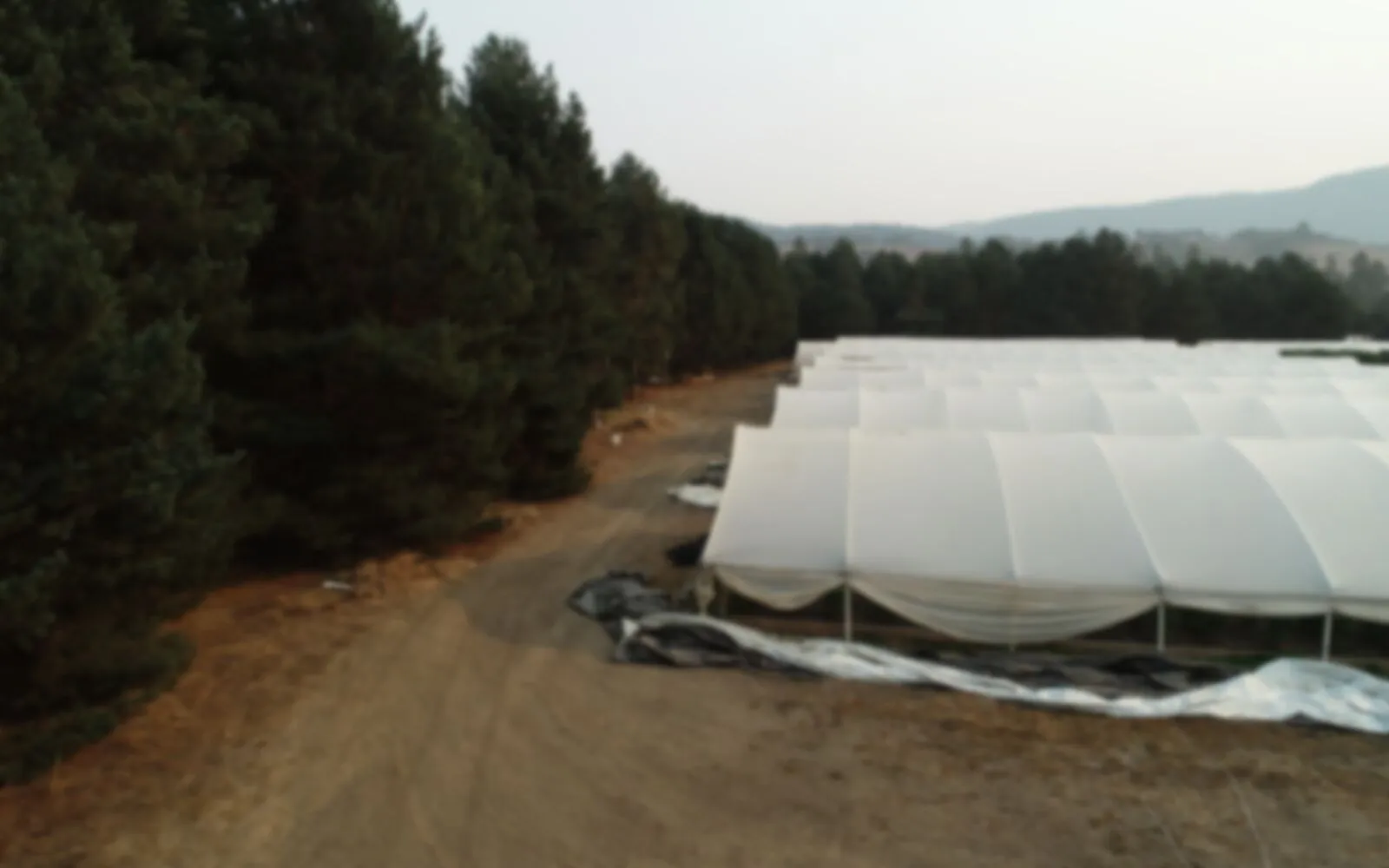
Our client runs a large, licensed cannabis farm on a rural property off Highway 36 in Humboldt County. It’s an active operation with a nursery, greenhouses, an office and a large two-story metal building used for processing, spread across open ground a long way from town. For a farm like this, security isn’t optional, so we don’t name the client or show anything that would identify the site.
The challenge
The farm hired us in June 2020 to design and install a property-wide surveillance system and Wi-Fi network:
- Cameras on every way in and out of the sensitive areas: the property itself, the office, the nursery, the greenhouses and the processing building.
- Recording that holds as much video as possible and keeps going if a hard drive fails.
- No power where some cameras needed to go. It’s a rural property, and running utility power to every camera location wasn’t practical.
- Wi-Fi outdoors across the working areas, with internet for staff and temporary workers kept apart from the security system.
- Warning when a vehicle arrives at the front gate, loud enough to hear across the property.
What we built
A network core built for cameras
At the heart of the system is a UniFi Dream Machine Pro, running both UniFi Network and UniFi Protect, with a UniFi Switch Pro 24 PoE that powers cameras and radios over their network cables, including PoE++ for higher-power devices. Video records to a UniFi UNVR with four 12 TB surveillance hard drives in a RAID 5 array, chosen for maximum retention and configured to survive a single drive failure.
 How it fits together, with the cameras on a network of their own.
Cameras on a network of their own
The cameras sit on a dedicated VLAN that is isolated from every other network on the farm and has no outbound internet access. They can talk to the recorder and nothing else. A compromised phone on the guest Wi-Fi can’t reach them, and the cameras themselves can’t send anything out to the internet. Viewing goes through UniFi Protect, not through the cameras directly.
Buried conduit where power could reach
Where a camera pole was within reach of the network, we trenched and buried conduit to carry Ethernet and PoE out to it, so one cable powers and connects each device. Most of these end devices are pole mounted, above the reach of casual tampering and with a clear view of the entrances they cover. Long runs are sized before anything goes in the ground, so the device at the far end still gets the power it needs.
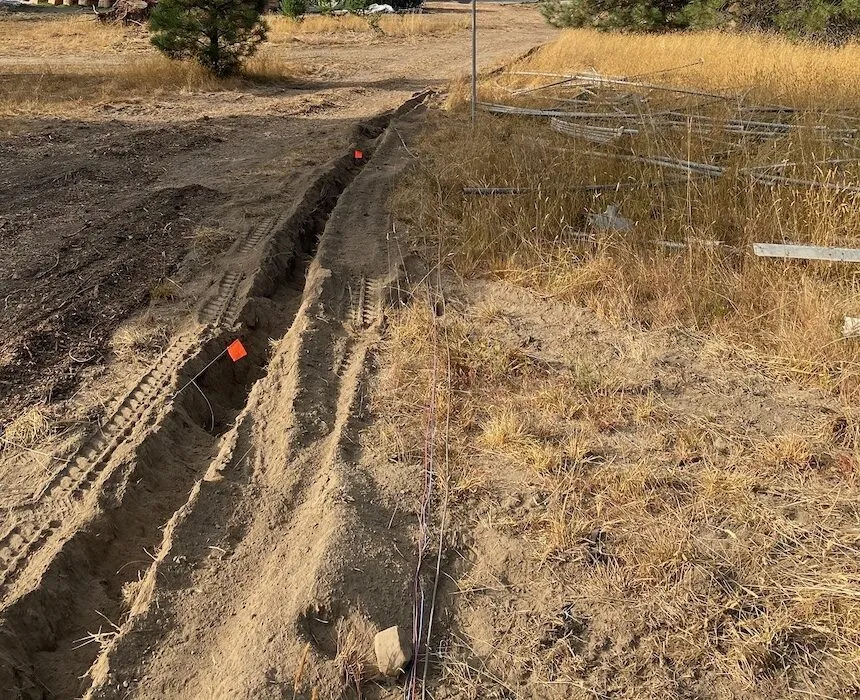 Trenching for buried conduit out to one of the camera poles.
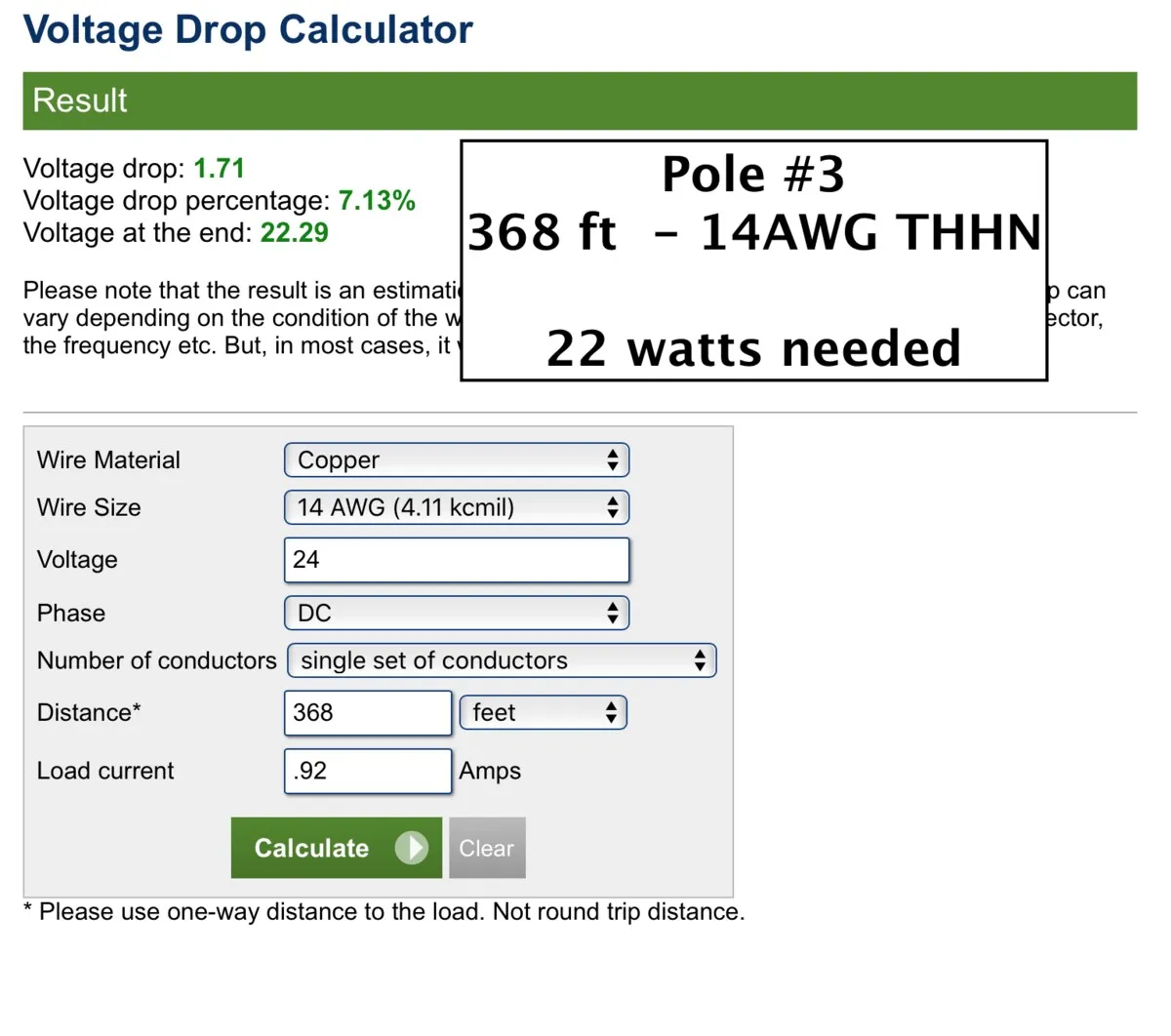 Checking the voltage drop on the run to one pole before the cable went in the ground.
Solar camera poles where it couldn’t
Some cameras had to go where neither power nor a trench could practically reach. Those run on their own solar panel, charge controller and battery, and send their video home over a point-to-point wireless link to the network core. Each one is a self-contained camera site that needs no utility power at all.
 A solar camera pole: its own power, with video sent home over the air.
Wi-Fi across the property
For wireless coverage we mounted UniFi AC Mesh access points outdoors, placed to cover the areas the farm needed. A guest hotspot gives staff and temporary workers internet access without any way into the farm’s own networks or the security system.
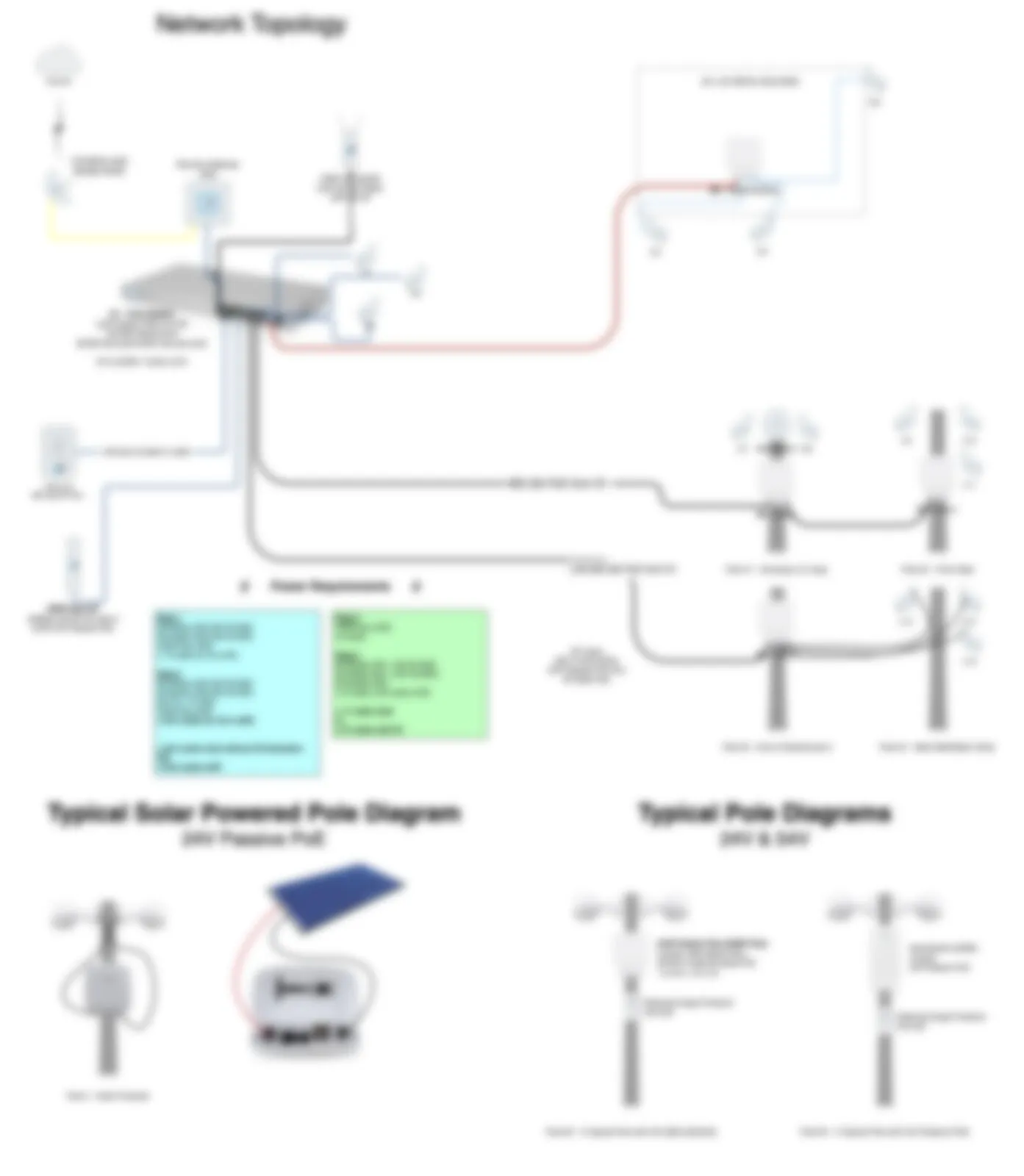 Part of the network documentation we delivered: topology and typical pole designs. Blurred to protect our client’s privacy and security.
A driveway alarm that rings a bell
Cameras record what happened. The farm also wanted to know the moment a vehicle reaches the front gate. For that we chose Dakota Alert, a US company that makes excellent wireless alert products:
- A buried vehicle probe near the front gate detects vehicles.
- Its transmitter is hidden inside a birdhouse mounted in a nearby tree within the perimeter walls, out of sight and out of reach.
- In the office, an RE-4000 Plus receiver picks up the alert and plays a sound.
- The receiver’s dry-contact output switches a loud ringing bell on a low-voltage 12 V power supply, so the alert carries well beyond the office.
 From a car at the gate to a bell ringing, with nothing visible at the gate itself.
Mapped and documented
Every camera, pole, link and cable run was planned on a site map and documented, so the system can be maintained and expanded without guesswork.
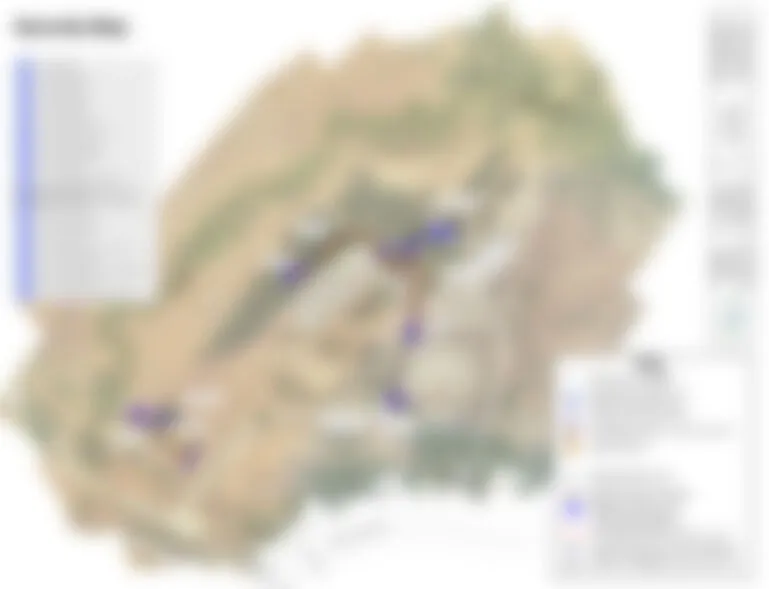 The security map, blurred so the site and camera positions can’t be identified.
The result
The farm has cameras on every way in and out of its sensitive areas, recording to a RAID-protected recorder on a camera network that can’t reach the internet. Solar poles cover the places power couldn’t reach, outdoor Wi-Fi serves the working areas with a separate guest hotspot, and a bell rings whenever a vehicle pulls up to the gate.
Securing a rural operation?
Farms, ranches and remote facilities share the same problems: long distances, no power where cameras need to go, and a need for discretion. We design around all three, from solar poles and buried conduit to isolated camera networks. See Video surveillance and Rural connectivity.