
The client
Elk Country RV Resort & Campground is a 200-acre resort in Trinidad, California, on the Redwood Highway (US 101). It’s known for its resident herd of Roosevelt elk, which graze in the resort’s meadows, and guests choose between sites in “the Meadow” and “the Forest”. The remote setting is a big part of the appeal. It’s also hard on technology, and the resort has been a managed IT client of ours since 2012.
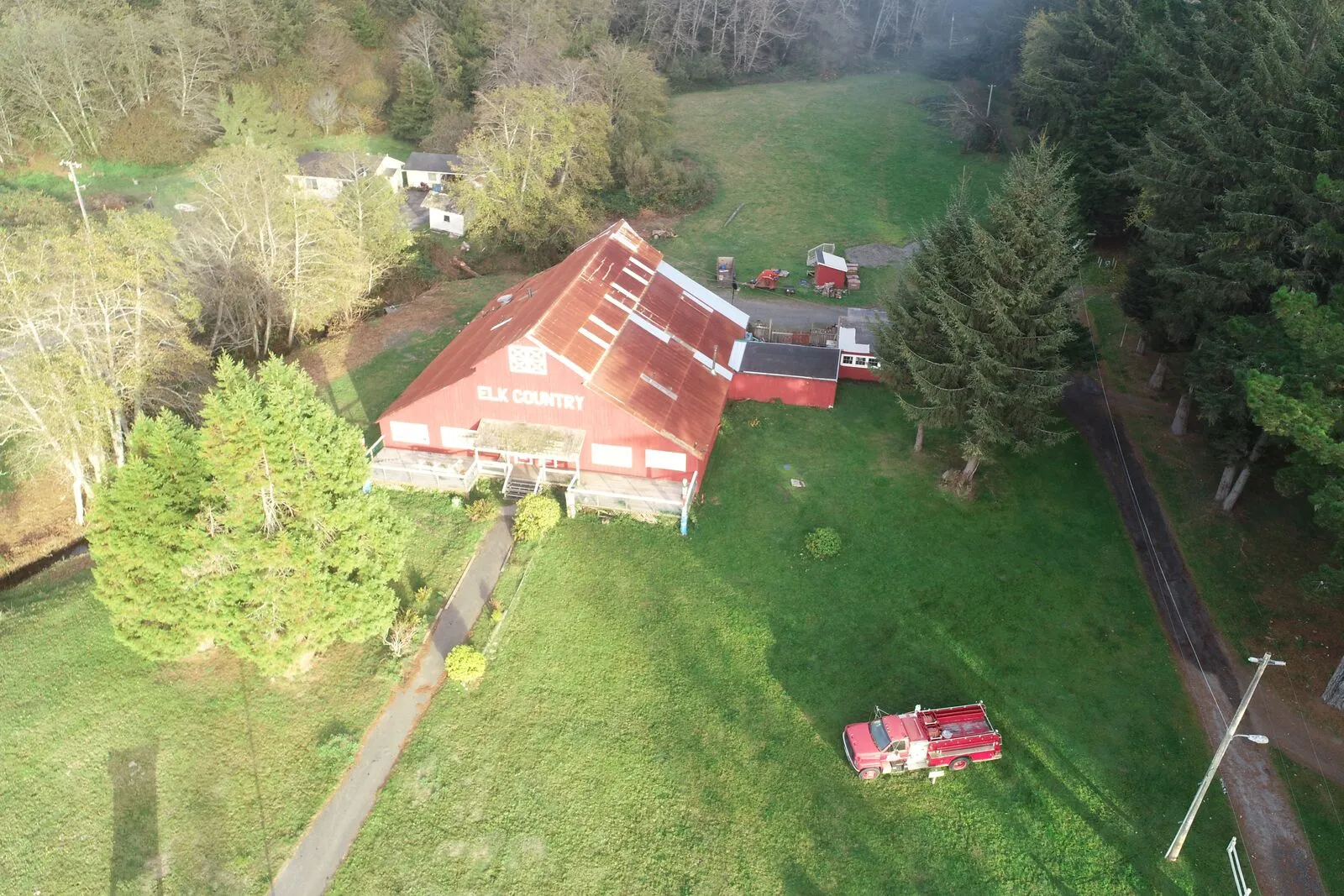 The resort’s main barn from our drone, during a flight Elk Country approved in 2020 to map the site accurately with photogrammetry.
The challenge
The resort came to us with four problems that all had to be solved together:
- Reliable internet in a remote location. High-speed internet barely reaches this part of the coast. The resort relied on ViaSat satellite service, which meant high latency and unreliable connections, especially when the park was full.
- IT that runs without someone on site. Business operations, staff communications and guest services all needed support, with as little on-site involvement as possible.
- Cameras across a spread-out property. Management wanted to see large outdoor areas, high-traffic spots like check-in, and the far sections of the campground.
- Separate networks for guests, staff and management. Public guest Wi-Fi must never share a network with the office or the systems that run the park.
What we built
Internet that doesn’t depend on one link
Instead of looking for one perfect connection, we combined several imperfect ones so they cover for each other: multiple Starlink terminals plus LTE from both Verizon and T-Mobile. All of them terminate on a Peplink Balance Two router running SpeedFusion, which builds one tunnel over every link to a SpeedFusion endpoint in the cloud. When a link degrades or drops, traffic moves to the links that are still working and sessions carry on, so a card payment or phone call doesn’t have to start over.
 Three kinds of internet link in, one steady connection out, and separate networks behind it.
We wrote this part up in more detail, including why we chose two cellular carriers, in Starlink, Two LTE Carriers and SpeedFusion.
One network across six zones
The resort is spread across six areas: the small office that houses the network operations center (NOC), the store and operations building, the schoolhouse, the meadow, the forest and the farmhouse. Running cable between all of them isn’t practical, so the NOC reaches the rest of the property over Ubiquiti airMAX point-to-point and point-to-multipoint wireless links.
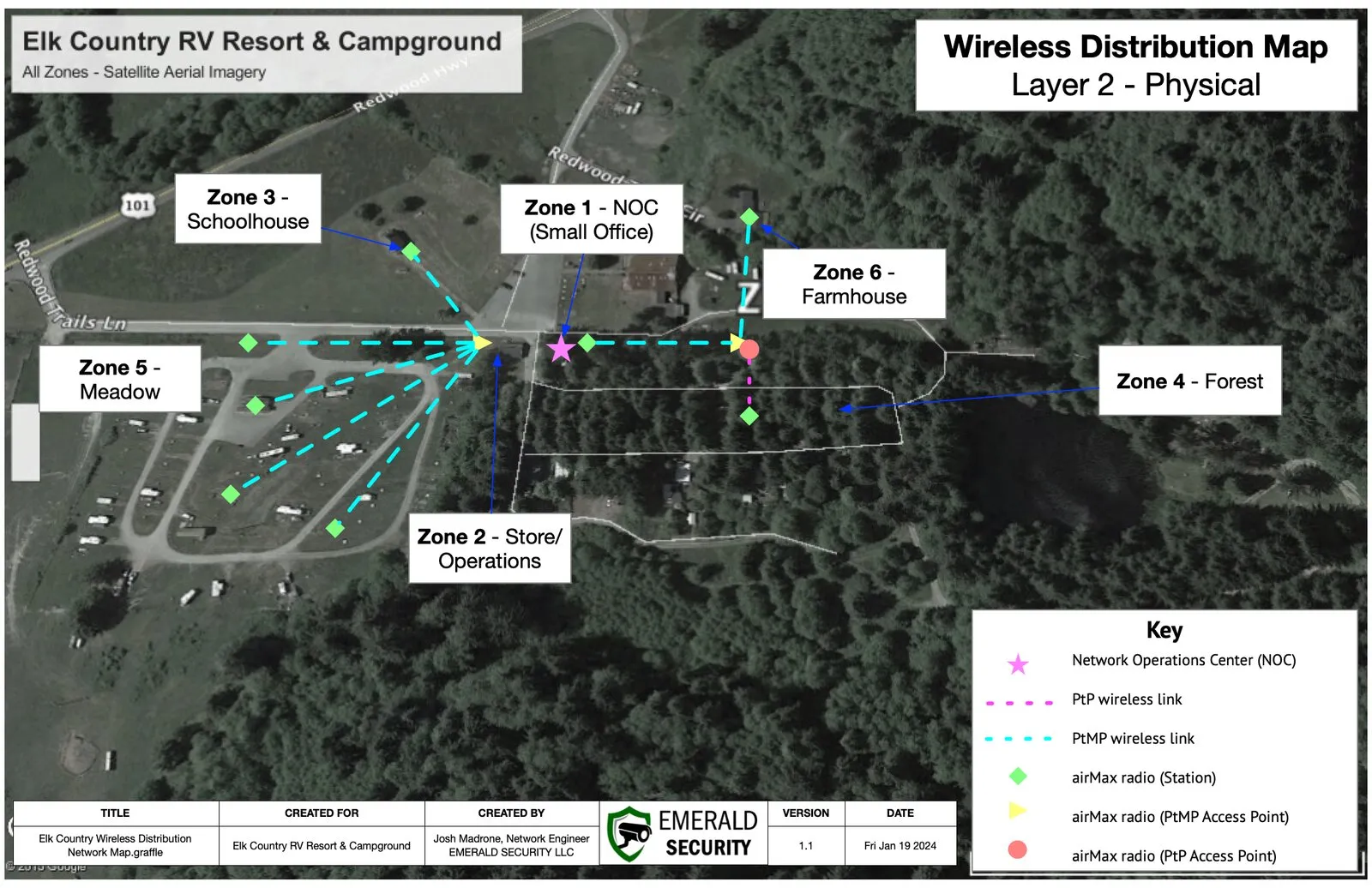 Our wireless distribution map for the resort (January 2024). Satellite imagery © Google.
Where cable does make sense, it’s built to last outdoors: 12-strand single-mode fiber on the overhead run at the core, and buried, shielded outdoor Ethernet to nearby access points. Out in the campground, mesh access points are never more than one wireless hop from a wired one, which keeps guest Wi-Fi responsive.
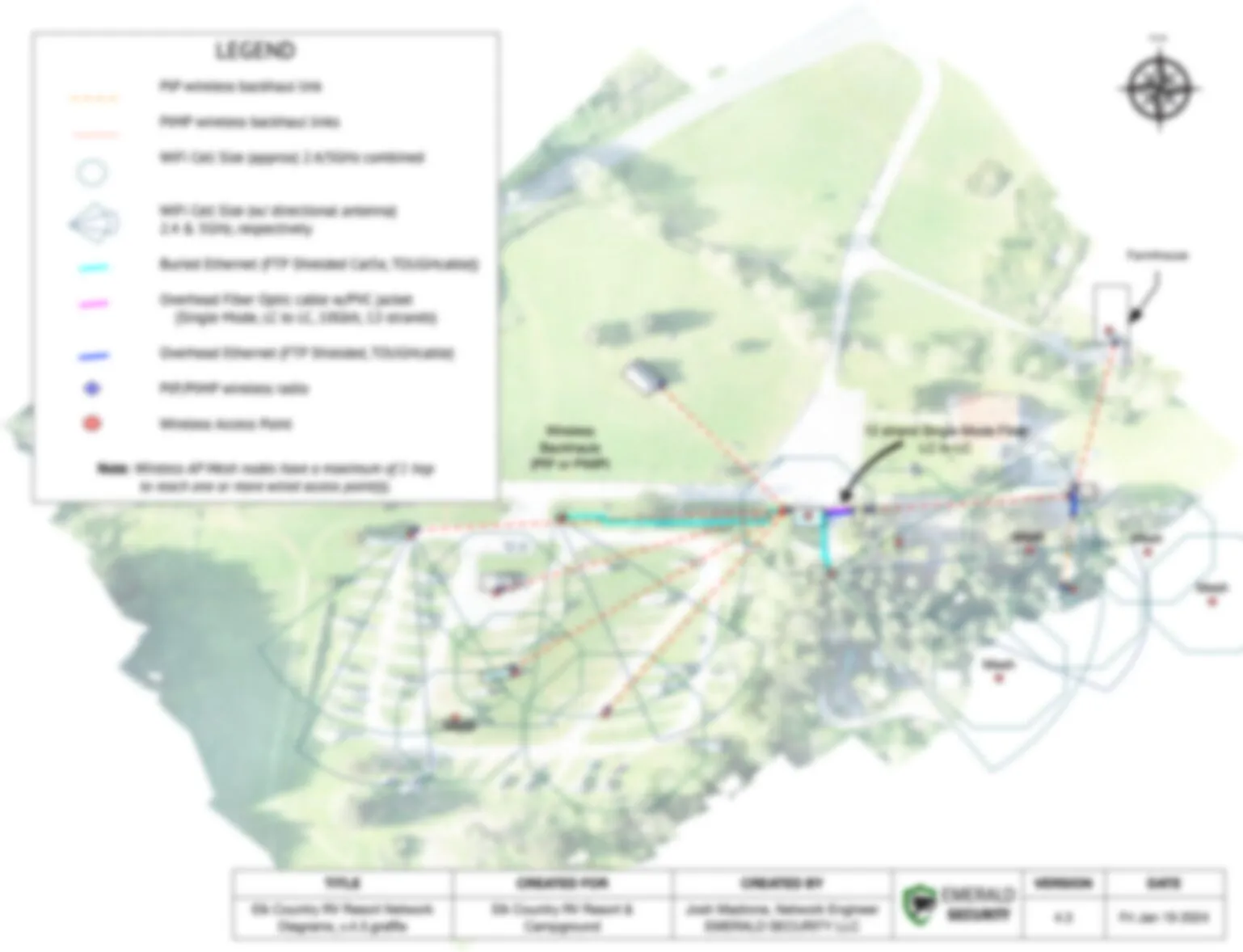 The physical network as of January 2024: wireless backhauls, fiber, buried cable and Wi-Fi coverage. Blurred to protect our client’s privacy.
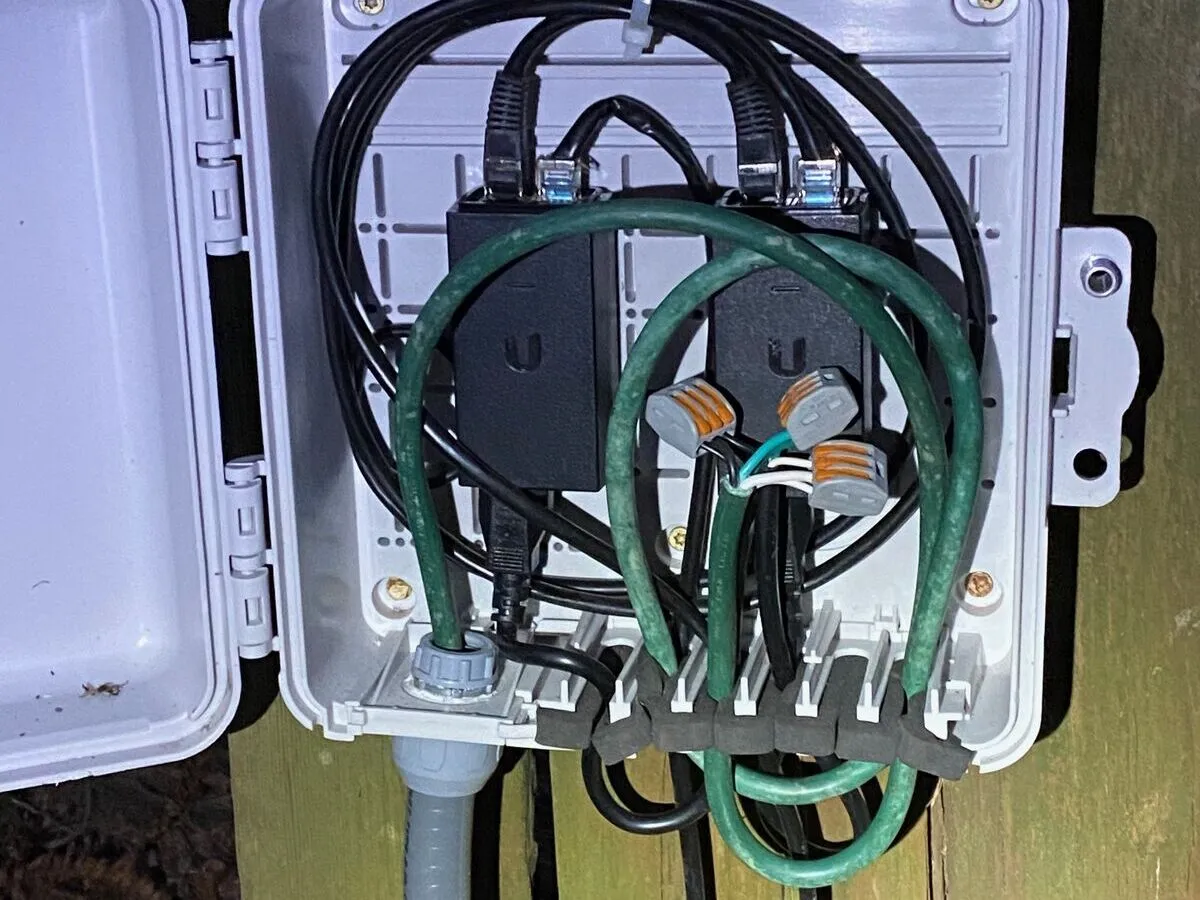 A new weatherproof enclosure at RV site 32, installed in 2021.
Guest Wi-Fi that’s easy to use and kept apart
The resort runs on a UniFi network with VLANs that keep guest, staff and administrative traffic apart. Guest bandwidth is shaped so no one device can swamp the connection, and guests sign in through a branded captive portal with the resort’s logo, answers to common questions, a terms-of-use checkbox and Guest Access sign-in.
Coverage was planned zone by zone, with on-site Wi-Fi surveys rather than guesses from a map.
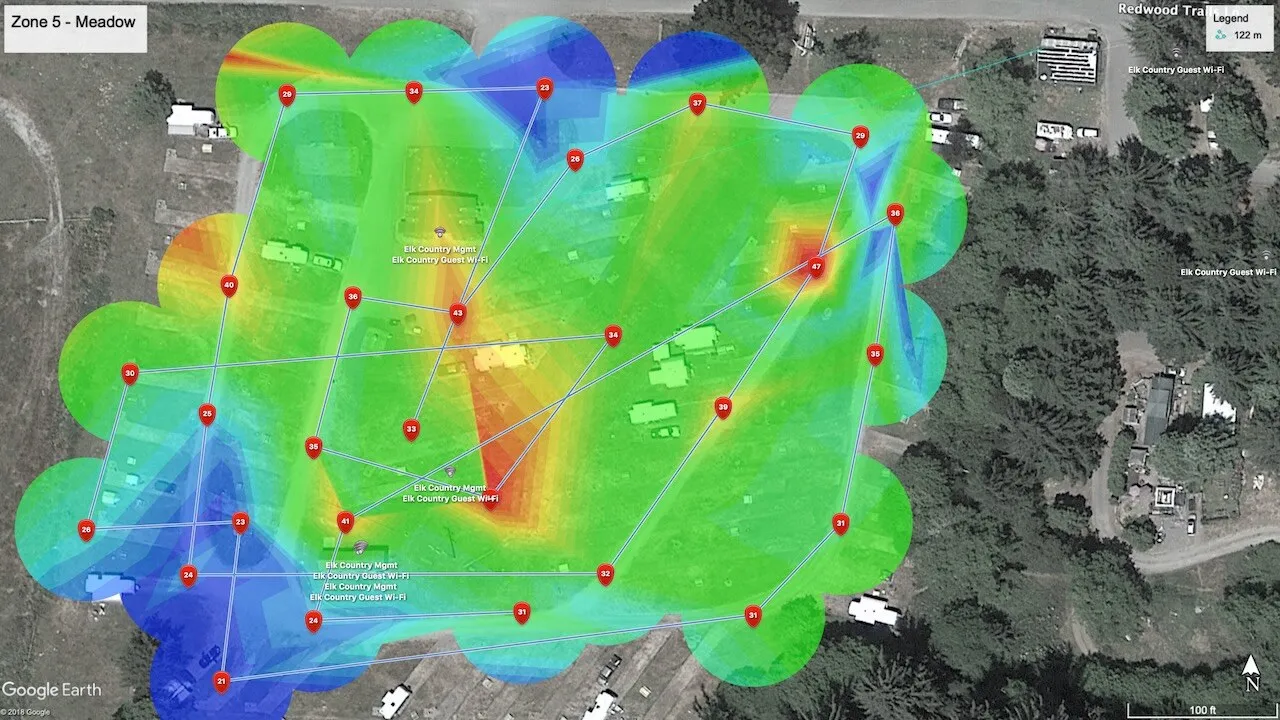 A Wi-Fi survey of the meadow zone. Aerial imagery © 2018 Google.
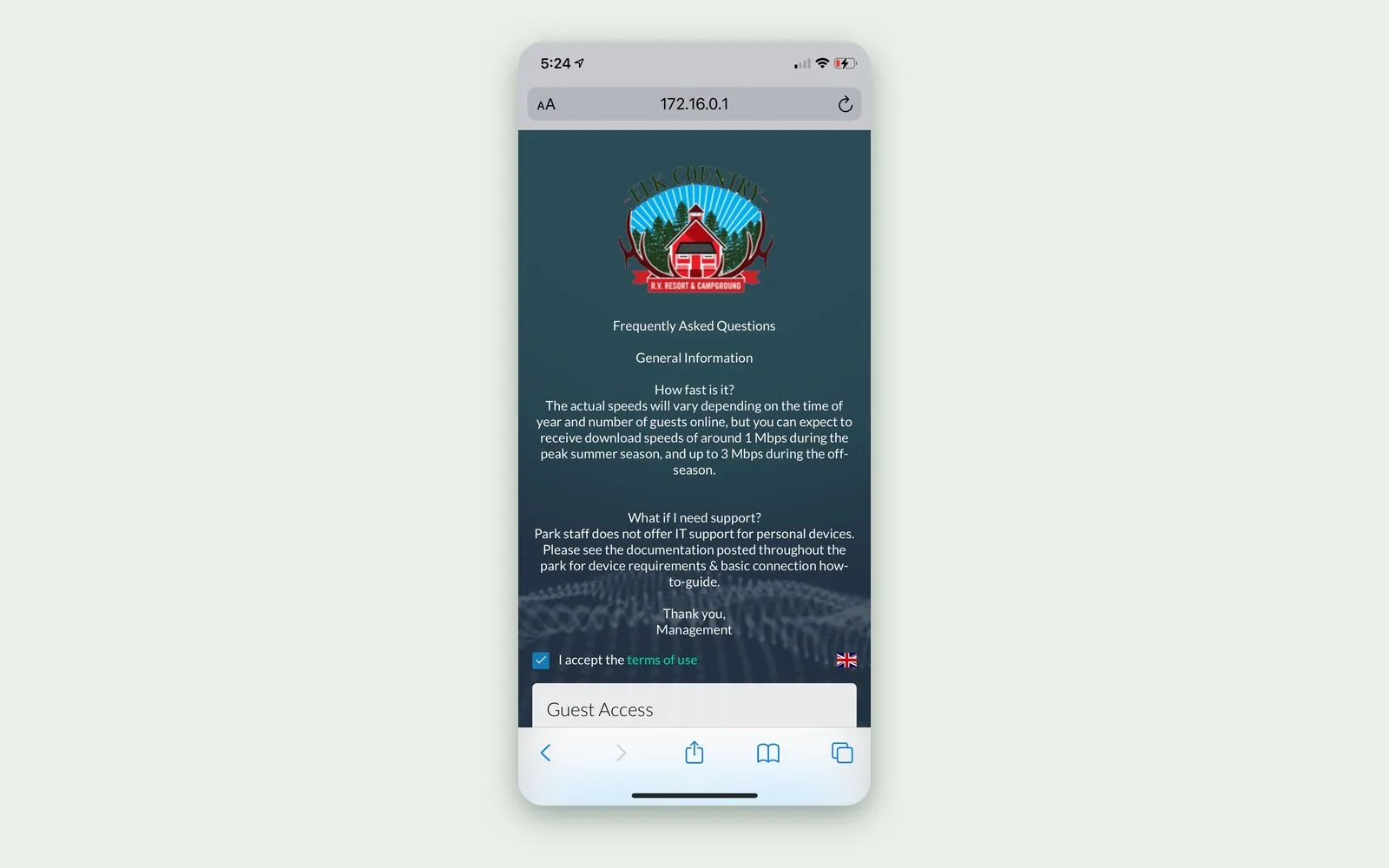 The guest sign-in portal, as guests see it on a phone.
Cameras across the property
We designed and installed an IP video surveillance system with weather-resistant, high-resolution cameras and a centralized network video recorder. Coverage takes in the large outdoor areas, the high-traffic spots and the remote sections of the campground, and remote access with motion alerts lets management check in when they’re away from the park.
Fully managed IT
Behind all of it is fully managed IT: proactive monitoring, automated backups, remote maintenance and on-call support. A network with several internet links, six zones and a camera system needs someone watching it, and the service scales up and down with the resort’s busy and quiet seasons.
The result
Instead of one high-latency satellite link, the resort now runs on several connections that cover for each other, with much lower latency than the old satellite service. Guests, staff and management each have their own network. The cameras cover the whole property, and one team looks after all of it.
Running a remote property?
Campgrounds, ranches and rural businesses run into the same problems: one slow link, long distances between buildings, and nobody on site to keep the technology running. We start with a walk of the property before we recommend anything. See Rural connectivity, Video surveillance and Managed IT.